Democratizing Software Development in the Low-Code Era
In the rapidly evolving landscape of software development, Replit has emerged as a significant player at the intersection of traditional coding and the growing low-code/no-code movement. As businesses and individuals seek faster, more accessible ways to build software, Replit’s browser-based development environment offers a unique approach that bridges the gap between traditional programming and modern development needs.
The Rise of Low-Code/No-Code Development
The software development industry has witnessed a significant shift toward low-code and no-code solutions, driven by several factors:
- Increasing demand for software development across all industries
- Shortage of professional developers
- Need for rapid prototyping and deployment
- Growing emphasis on citizen developers
- Rising costs of traditional software development
Replit’s Position in the Market
Replit differentiates itself by offering a hybrid approach that combines aspects of traditional integrated development environments (IDEs) with low-code features. Unlike pure low-code platforms, Replit maintains a code-first approach while introducing tools and features that make development more accessible to beginners and more efficient for experienced developers.
Key Features That Support Low-Code Development
- Templates and Starter Projects
- Pre-built application templates
- Industry-standard boilerplate code
- Framework-specific starting points
- Community-shared templates
- Visual Development Tools
- Built-in UI components
- Drag-and-drop interface elements
- Visual database management
- Integrated deployment tools
- Collaborative Features
- Real-time collaboration
- Shared workspaces
- Multiplayer coding environments
- Version control integration
Credit System and Resource Management
Replit operates on a credit-based system that provides flexible resource allocation for developers:
Credit Structure
- Free users receive a monthly allocation of credits
- Credits refresh at the beginning of each billing cycle
- Additional credits can be purchased as needed
- Teams and organizations can share credit pools
Resource Consumption
- Credits are consumed based on:
- Compute resources used (CPU, RAM)
- Storage space utilized
- Bandwidth consumption
- Always-on repl hosting
- Special features like Ghostwriter AI assistance
Credit Management Features
- Real-time credit usage monitoring
- Usage alerts and notifications
- Automatic sleep mode for inactive repls
- Credit optimization recommendations
- Priority resource access for paid plans
Pricing Tiers
- Free Tier: Basic credit allocation with limited resources
- Pro Plan: Increased credit allocation and features
- Teams Plan: Shared credit pools and collaboration tools
- Enterprise: Custom credit allocation and dedicated resources
Major Competitors and Market Positioning
Traditional Low-Code Platforms
- Bubble
- Focuses on pure visual development
- Strong emphasis on business applications
- More restricted in terms of customization
- Webflow
- Specializes in website creation
- Advanced visual design capabilities
- Limited application development features
Cloud Development Environments
- GitHub Codespaces
- Deeper integration with GitHub
- More developer-focused
- Higher learning curve
- CodeSandbox
- Similar browser-based approach
- Focus on front-end development
- Less comprehensive than Replit
Replit’s Competitive Advantages
- Educational Focus
- Built-in learning resources
- Gradual progression from visual to code
- Strong community support for learners
- Full-Stack Capabilities
- Support for multiple programming languages
- Database integration
- Deployment and hosting included
- Cost-Effectiveness
- Free tier for basic usage
- Competitive pricing for teams
- Infrastructure included in pricing
- Speed to Market
- Instant environment setup
- Quick deployment options
- Integrated testing and debugging
Use Cases and Target Audiences
- Education Sector
- Computer science education
- Coding bootcamps
- Self-paced learning
- Startups and Small Businesses
- Rapid prototyping
- MVP development
- Cost-effective scaling
- Individual Developers
- Portfolio projects
- Skill development
- Side projects
Challenges and Limitations
- Performance Considerations
- Browser-based limitations
- Resource constraints in free tier
- Network dependency
- Enterprise Adoption
- Security concerns
- Compliance requirements
- Integration with existing systems
Future Outlook
Replit’s position in the market continues to strengthen as it evolves its platform to meet the changing needs of developers and organizations. The platform’s approach to combining traditional coding with low-code features positions it well for future growth, particularly as:
- The demand for hybrid development environments increases
- More organizations adopt cloud-based development tools
- The need for collaborative coding environments grows
- Educational institutions increasingly incorporate coding into their curricula
Signing Up
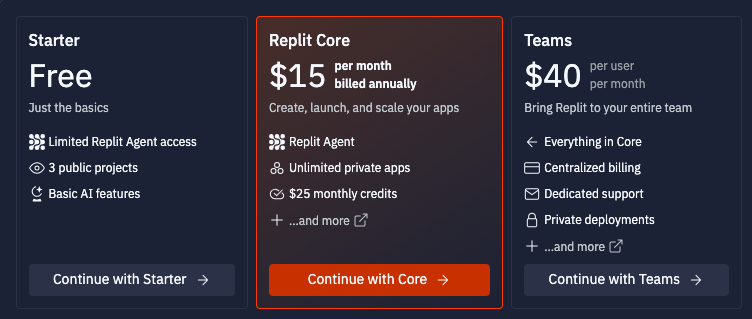
When you first sign up, you’ll be prompted to choose a plan.
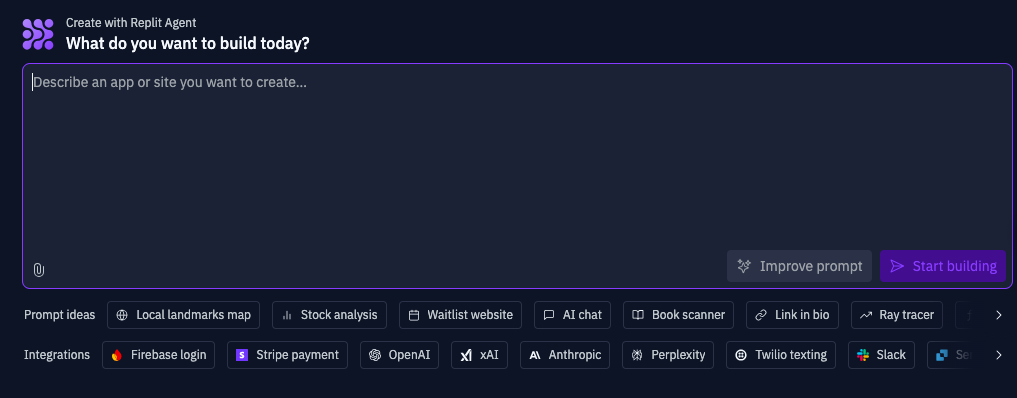
After choosing a plan, you’ll be asked what you want to build.
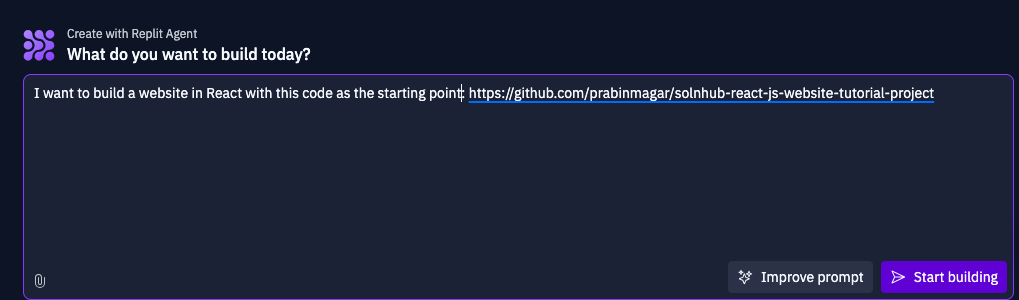
I typed the following after finding a good ReactJS template tutorial on YouTube: https://m.youtube.com/watch?v=1qGIwZjdOhs&t=1463s&pp=2AG3C5ACAQ%3D%3D
Click Improve Prompt.
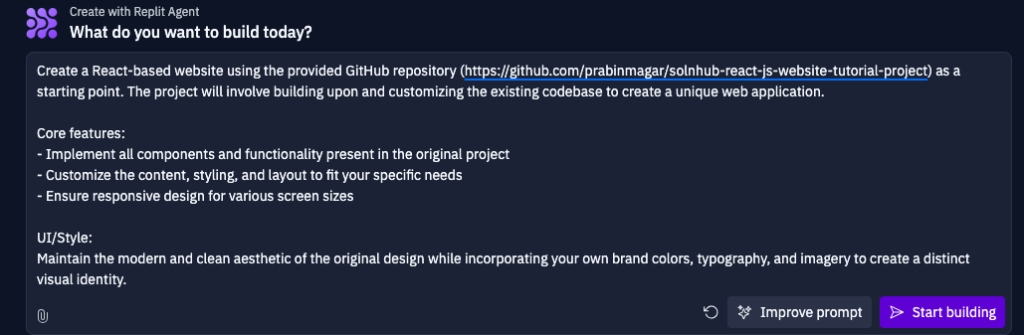
Replit recommends the following enhancements to the site. Check the boxes and click Approve Plan and Start.
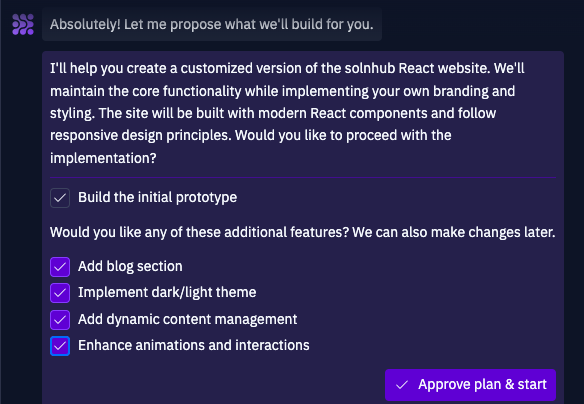
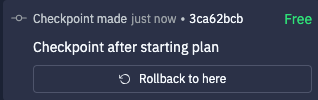
Replit creates a checkpoint that allows for rollback.
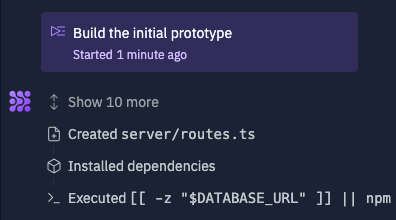
Replit builds the initial prototype and installs the dependencies
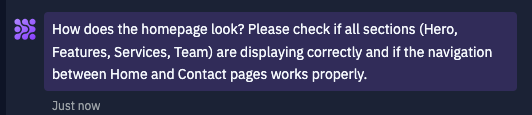
Replit pauses to ask for feedback on the homepage.
You’ll be prompted for additional features.
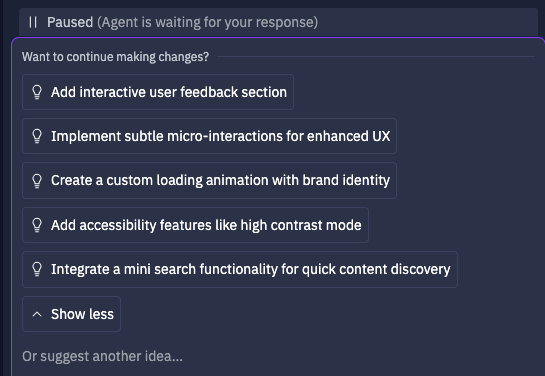
Each section can be added just by telling Replit what changes it should make.
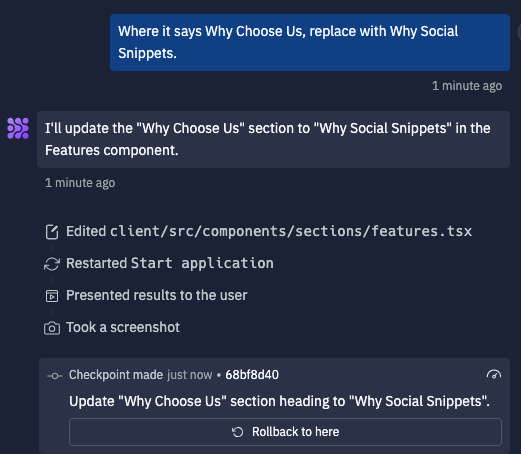
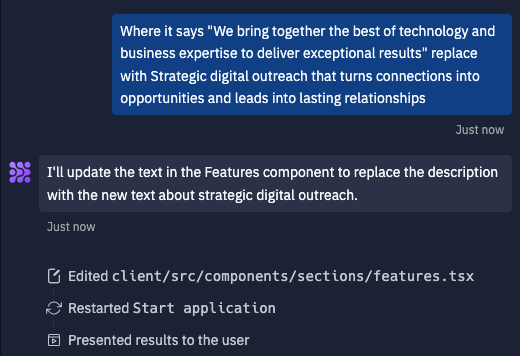
Now we’ll change the tagline on the homepage
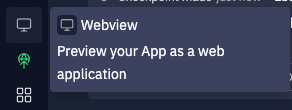
Click Webview to preview your application
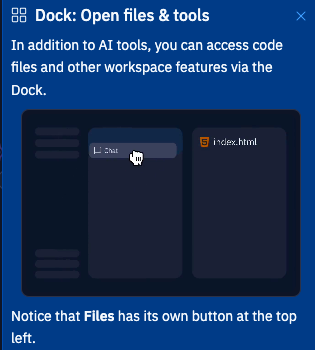
To open your files, click the icon.
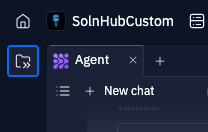
Or you can use the shortcut on a Mac.

You’ll then see a list of your files
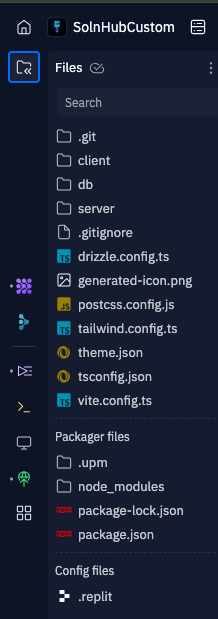
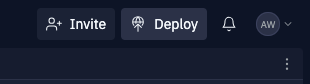
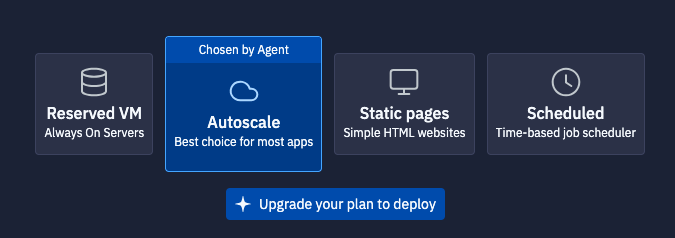
When you’ve made your changes, and want to deploy your site to a virtual machine or an autoscale environment, click Deploy in the upper right.
Note that you can also access Deployments from the left navigation.
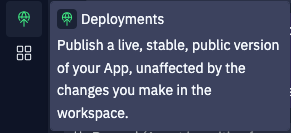
You’ll be presented options for deployment
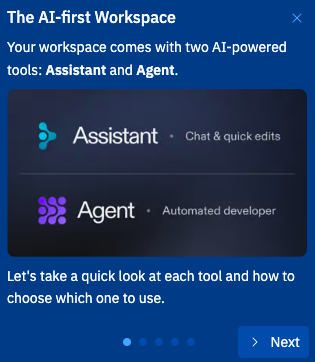
There are two AI-powered agents: Assistant and Agent
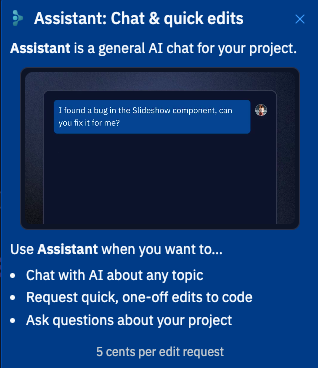
Assistant will cost you .05c per edit request
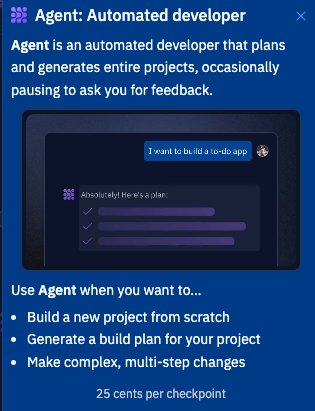
Agent costs .25c per checkpoint
You access code files through the Dock
Click Run at any time
Conclusion
Replit represents a new category in the development platform space – one that bridges the gap between traditional coding and low-code solutions. Its unique approach provides value to both beginners and experienced developers, making it a compelling choice for modern software development needs. While pure low-code platforms may offer simpler solutions for specific use cases, Replit’s flexibility, comprehensive feature set, and transparent credit-based resource management make it an attractive option for those seeking a more scalable and adaptable development environment.