Cisco Umbrella is a cloud-native security platform designed to protect organizations from internet-based threats by enforcing security at the cloud edge. It integrates multiple security functions, including DNS-layer security, secure web gateway (SWG), cloud access security broker (CASB), data loss prevention (DLP), cloud-delivered firewall, and remote browser isolation (RBI), into a single solution with unified management. https://www.cisco.com/c/dam/en/us/products/collateral/security/aag-cisco-umbrella.pdf
Pros of Cisco Umbrella:
- Comprehensive Protection: By converging various security functions, Umbrella offers a broad spectrum of protection against diverse threats.
- Cloud-Based Delivery: Its cloud-native architecture ensures rapid deployment and scalability, accommodating organizations of different sizes.
- Integration Capabilities: Umbrella provides native integration across Cisco’s infrastructure and supports over 400 third-party integrations, enhancing existing security investments.
Cons of Cisco Umbrella:
- Pricing: Some users find Cisco Umbrella to be relatively expensive compared to other solutions.
- Complexity: The platform’s extensive features can result in a complex user interface, potentially making simple tasks more burdensome.
Competitors:
Several alternatives to Cisco Umbrella exist, each with its own strengths and weaknesses:
- Zscaler Internet Access: Offers strong support and scalability but has a complex pricing structure that may require careful explanation to clients.
- WebTitan Cloud: Provides competitive pricing and is recognized for its technical support.
- EfficientIP DNS Guardian: Presents a more affordable entry point, contrasting with Cisco’s premium pricing.
Pricing:
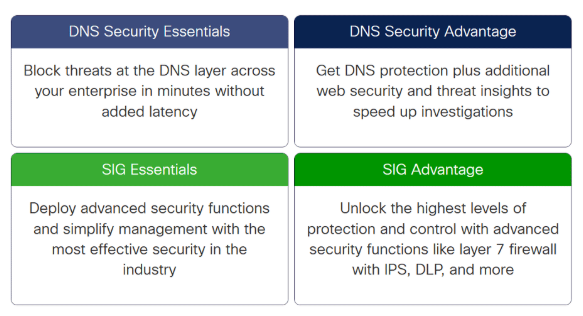
Cisco Umbrella’s pricing can vary based on the specific package and features selected. Cisco offers four flavors: DNS Security Essentials, Security Advantage, SIG Essentials, and SIG Advantage.
Implementation Overview:
Implementing Cisco Umbrella involves configuring policies that provide a unified point of control for DNS-layer security, cloud-delivered firewall, and secure web gateway functionalities. When a user requests access to a destination, Umbrella applies the configured policies to determine the appropriate action, such as allowing or blocking the request.
For detailed implementation guidance, refer to the official Cisco Umbrella documentation: https://docs.umbrella.com/umbrella-user-guide/docs/getting-started