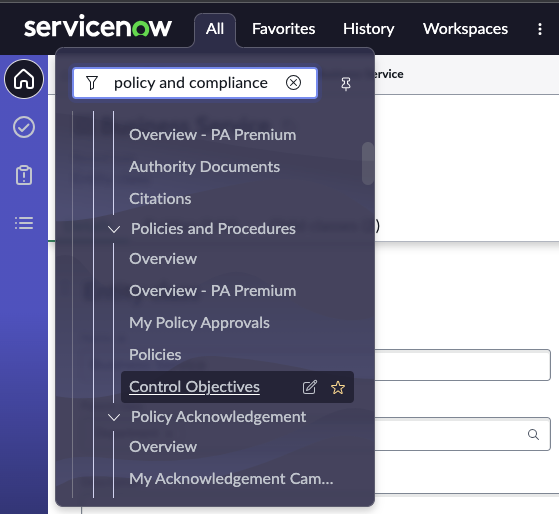
A control objective is a statement outlining the desired outcome or purpose of implementing a particular control. Control objectives play a crucial role guiding organizations in the development, implementation, and evaluation of controls to manage risks and ensure compliance.
For information on control objectives, you can read the ServiceNow documentation here: https://docs.servicenow.com/csh?topicname=t_CreateAPolicyStatement.html&version=latest
These are the primary reasons control objectives are utilized in GRC:
Alignment with Business Goals:
Control objectives are designed to align with and support the achievement of broader business goals and objectives. They provide a clear link between the controls implemented and the organization’s strategic priorities.
Risk Management:
Control objectives help organizations identify and address specific risks. By defining the desired outcome of a control, they articulate the risk mitigation or risk management goal that the control aims to achieve.
Compliance Requirements:
Many control objectives are directly tied to regulatory requirements, industry standards, or internal policies. They serve as a bridge between the legal and regulatory landscape and the specific controls an organization needs to implement for compliance.
Control Design and Implementation:
Control objectives guide the design and implementation of controls by providing a clear understanding of the intended purpose. This clarity ensures that controls are tailored to address specific risks and compliance needs.
Performance Measurement:
Control objectives establish criteria for evaluating the effectiveness of controls. Organizations can measure their performance against these objectives to determine whether controls are achieving the desired outcomes.
Communication and Documentation:
Control objectives serve as a basis for communication and documentation within the organization. They provide a common language and understanding of the purpose of controls among different stakeholders, including management, auditors, and compliance officers.
Continuous Improvement:
Control objectives support a culture of continuous improvement by facilitating regular assessments and reviews. Organizations can use control objectives as benchmarks to identify areas for enhancement and optimization of controls.
Auditing and Assurance:
Control objectives play a crucial role in audit processes. Auditors use these objectives to evaluate the design and effectiveness of controls. They provide a standard against which auditors can assess compliance and risk management practices.
Efficient Resource Allocation:
By clearly defining control objectives, organizations can ensure that resources are allocated efficiently. This involves focusing efforts on controls that directly contribute to achieving the desired risk mitigation and compliance outcomes.
Documentation of Intent:
Control objectives serve as documentation of the organization’s intent and commitment to managing risks and complying with relevant regulations. This documentation is valuable for demonstrating due diligence in the event of audits or regulatory scrutiny.
To create a new control objective, navigate to All > Policy and Compliance > Control Objectives. You’ll need one of the following roles: sn_compliance.admin, sn_compliance.manager, sn_compliance.user